Forex Scalping Explained: Best Strategies for Fast Profits
Thinking of diving into a Forex scalping strategy? Scalping in the FX market can be an excellent way to accumulate small, but frequent profits from fast-paced decisions. It’s not for the weak at heart, as traders need to be quick, disciplined, and cautious to get the best results.
However, for those with the right strategy (and some helpful tech), scalping FX can be profitable, exciting, and a dynamic way to trade. Scalping is all about managing super short-term positions, and taking advantage of shifts in the market as soon as they happen.
But there are various ways to approach the strategy, based on things like your risk appetite. Herre, we’ll look at some of the most popular forex scalping strategies, and share our top tips for an effective journey into the scalping space.
What is Scalping in Forex?
Forex scalping is a trading technique that revolves around ultra short-term trading. In other words, you open and close positions in minutes (sometimes in seconds) with the goal of capturing just a few pips of profit with each move. Instead of waiting hours or days to take advantage of a big swing, scalpers take advantage of the tiny movements always happening in the FX space.
It’s all about accumulating a lot of little wins as quickly as possible – which is why some people refer to Forex scalping as a “hit and run” strategy. Most scalpers end each day with dozens of entries and exit points – rather than just one or two.
Scalping in the Forex market is defined by:
- Fast Trades: You might hold a position for 2, 5, or 15 minutes.
- Small Targets: On average, scalpers aim for around 5–15 pips profit per trade, sometimes as low as 2–3 pips for particularly frenetic styles.
- High Frequency: Since profit targets are small, the volume of trades can be high—some scalpers take 30 or more trades in a session.
Why Scalpers Choose Scalping
Scalping FX isn’t for everyone. You need a lot of discipline, speed, and a good exit strategy. But there are benefits too. For instance,
- Instant Feedback: One attractive element is the quick gratification. You know within minutes if your entry and exit decisions were on point.
- Reduced Overnight Exposure: Swing traders risk potential overnight volatility. Scalpers shut down trades rapidly, often ending the day flat with no open positions, thereby minimizing many unknowns.
- Opportunity in Both Trending and Ranging Markets: Because you only need a few pips, even a consolidating currency pair could provide profit chances if you time your entries right.
Some traders even combine scalping with other strategies, using long-term and short-term methods to increase their win rate over time.
The Pros and Cons of Forex Scalping
Like any trading strategy, scalping has pros and cons. On the one hand, it can deliver fast results and frequent opportunities to earn profits. On the other hand, it can be stressful and time consuming. Here’s a quick rundown of the basic pros and cons.
The Pros:
- Fast Results & Frequent Opportunities: Scalpers see the outcomes of their trades quickly. A handful of pips here and there quickly accumulates over time. Plus, since the Forex market is constantly moving, it’s usually easy to find lots of mini price swings across pairs.
- Less Exposure to Market Shocks: Since you’re only holding positions for a few minutes at a time, you’re less likely to be affected by big “overnight” changes caused by sudden real-world events. For instance, a shock interest-rate decision during an off-peak hour won’t diminish your earnings if you’ve already left the market.
- Flexibility in Markets: Forex scalping strategies work in ranging and trending markets. In a strong uptrend, scalpers can jump on quick dips and ride them for 5–10 pips. In a range-bound scenario, scalpers can buy near support and sell near resistance multiple times a day.
The Cons:
- Requires Focus and Speed: With scalping, you don’t have the luxury of analyzing market moves for hours before making decisions. You have to act fast, and constantly pay attention to the changes in your space – or you’ll miss out.
- High Spreads and Commissions: A scalper’s biggest challenge is the cost. Each time you open a trade, you pay the spread or commission. If your target is 5 pips but the spread is 2 pips, that’s almost half your potential gain. That’s why most scalpers stick with major pairs like EUR/USD with tighter spreads.
- The Stress Factor: As a scalper, you’ll be glued to your screen for hours, scanning short-term charts. Some traders flourish in that environment; others find it exhausting. A single slip up or moment of hesitation can also lead to major losses.
The Best Pairs and Time Zones for Scalp Trading Forex
There’s no single Forex scalping strategy that always guarantees success. But your win rates are likely to be a lot higher if you focus on certain things, like choosing the right currency pairs and trading times. Most scalpers in Forex focus on the most liquid, major trading pairs.
That means taking advantage of options like:
- EUR/USD: Often as low as 0.5 to 1 pip spread with some brokers.
- GBP/USD: Generally slightly wider than EUR/USD but still highly liquid.
- USD/JPY: Also known for its stable behavior and fairly tight spreads.
Once you’ve picked your pairs, you need to know when to trade. That really depends on the markets you’re going to be taking advantage of. In London, the largest volume of movements usually happens between 7am and 4pm. In New York, volatility amplifies between 12pm and 9pm.
Many scalpers prefer the 3–4 hour window when London and New York are both live; this sweet spot often features the tightest spreads and most tradeable swings.
Then you need to think about timeframes – or how often you make trading decisions. Common options include:
- 1-Minute (1M) Chart: For ultra-short-term moves, you need a watchful eye for quick entries/exits.
- 5-Minute (5M) Chart: A popular balance – it shows slightly bigger trends than the 1M, but still offers frequent signals.
- 15-Minute (15M) Chart: Considered the upper bound for many scalpers. The moves might be more reliable, but fewer trades are possible each hour.
Scalpers often combine a smaller timeframe (1M or 5M) for entries with a slightly larger timeframe (15M or 30M) to confirm overall direction.
The Top 5 Forex Scalping Strategies in 2025
Now for the main course: the strategies you can use for Forex scalping. Each approach has unique nuances, so before you dive into any new strategy, it’s always worth testing your assumptions with a demo account (don’t risk your cash until you’re confident).
Moving Average Crossover Scalping
Moving Averages are a great technical indicator in Forex. They help traders “visualize” short term trends – which make them handy for scalpers. Usually, scalpers use 5-minute, and 20 minute periods when tracking exponential moving averages.
When the 5 EMA crosses above the 20 EMA on a 1-minute or 5-minute chart, scalpers may open a buy position. On the other hand, if it falls below the line, you might decide to sell.
Here’s the tricky part – making quick decisions while watching out for false signals. It’s usually a good idea to double-check on the momentum of the market. If your chart’s higher timeframe is pointing up, and the 5 crosses above 20, it’s more reliable. Remember to watch out for whipsaws during low liquidity periods too.
The Bollinger Bands Squeeze Strategy
Bollinger bands are another technical indicator you might be familiar with in the FX market. They’re designed to track volatility. When the bands “contract” or become narrower, this signals a change in price movement. Scalpers wait for the breakout from the range to appear to identify the right time to jump in with a buy or sell action.
Tight stop losses are crucial with this strategy. If the price breaks above the upper Bollinger Band, you go long, placing a stop below the middle band or below the most recent swing low. Remember, the narrower the band, the bigger the potential momentum when it does expand – that’s handy when you’re trying to capture rapid pips.
RSI Scalping (Overbought/Oversold)
A standard RSI uses a 14-day lookback period, but scalpers often shorten it to 5 or even 3 for more frequent signals. A line that extends over 80 or 90 might indicate an overbought market; whereas a move under 20 or 10 indicates the pair might be oversold.
A lot of scalpers combine RSI insights with Fibonacci levels and moving averages. This means they can check whether the movements in the market align with support and resistance indicators. If you see a major support level and RSI is dipping under 20 on your RSI 5 chart, this might indicate it’s time to buy.
Remember to be cautious about using too many indicators at once. Although it’s important to validate your assumptions, too much data could lead to decision paralysis.
Scalping with Price Action
Price action trading assesses the movement of a security’s price with charts. Unlike traditional methods that combine a lot of different indicators, it looks at more straightforward things like historical prices and candlestick patterns. That allows traders to make moves quickly based on current information, while ignoring “general” trends in the market.
You might use things like:
- Pin Bars: Candles with a long tail indicate a possible reversal.
- Inside Bars: Candles that form completely inside the range of the previous bar, hinting at impending momentum bursts.
- Fakeouts: When price momentarily breaks a key level and then reverses swiftly.
Some scalp traders look at order flow or “Level II” data (if available) to gauge immediate demand/supply. However, in forex, this can be less transparent than in stocks or futures. Even so, you can sometimes glean short bursts of momentum from how quickly the price ticks up or down.
News Scalping
Major announcements, such as the Non-Farm Payroll (NFP) and inflation numbers (CPI), can trigger sudden changes in the Forex market – which is ideal for a Forex scalping strategy. Prices may move 20, 50, or even 100+ pips in minutes.
Notably, following and responding to news announcements can be riskier than some other strategies. That’s because during big announcements, spreads widen, and slippage becomes more common. Some scalpers wait a minute after the release to see direction clarity before hopping in. Others attempt immediate trades but keep an eye on the potential for large drawdowns if the market whipsaws.
Essential Tools for Forex Scalpers
To really excel at FX scalping, you need more than the right strategy, you’re going to need tools that allow you to act fast – faster than most other human traders. The most important resources you’ll need to invest in include:
- Low-Latency Brokers and ECN Accounts: A low-latency brokerage account means there’s minimal delay between you hitting a “buy” or “sell” button and the trade actually happening. ECN accounts, on the other hand, give you direct access to interbank liquidity, with narrower spreads – but you might pay a small commission per lot.
- Fast Execution VPS: Placing your trading software on a VPS physically close to the broker’s servers can reduce latency, particularly if your internet or computer is less stable. If you’re using algorithmic or auto trading bots, then this increased speed from a VPS is particularly useful – helping to reduce losses.
- Custom MT4/MT5 Indicators: Many expert scalpers program custom scripts or Expert Advisors (EAs) to automate or semi-automate parts of their routine. These tools can help alert you to sudden changes or volume spikes so you don’t miss out on opportunities.
The reason all of these tools are crucial is that they improve your speed. Think of it this way, if your broker’s average execution speed is 100–200 milliseconds, you might fare okay. But if it’s 500+ ms or you get frequent re-quotes, your scalping edge can evaporate. Fast execution is essential, especially when your entire profit target might be only 5 pips.
Risk Management in Forex Scalping Strategies
Risk management is another thing you’ll need to consider carefully if you’re scalping FX. A small mistake can easily wipe out your earnings, so invest in:
- Lot Size Calculations: Because scalping can generate multiple small gains, you don’t want one losing trade to blow it all up. For many, risking 1–2% of capital per trade is still a good guideline. On a smaller account, ensure you aren’t oversizing out of greed.
- Fixed Risk for Each Trade: If you are scalping EUR/USD, and your plan calls for a 5-pip stop, measure how many lots you can buy to fit that 1–2% risk. For example, if your account is $10,000, and 1% risk is $100, how big can your lot be with a 5-pip stop? Well, each pip in a standard lot is around $10, so a 5-pip stop would risk $50. This suggests you could open two standard lots to risk $100.
- Trailing Stops: Scalpers sometimes let winners run a bit if they detect strong momentum. A trailing stop automatically locks in gains as price moves positively. But be mindful: in choppy markets, tight trailing stops can cut off your trade prematurely.
A good risk management strategy might look something like this. Imagine you’re a scalper trading only the USD/JPY during the London–New York overlap. He aims for 6 pips profit with a 3 pip stop. He does 20 trades daily. On average, Manny wins 12 of them for 6 pips, loses 8 for 3 pips.
- Wins: 12 × 6 = 72 pips
- Losses: 8 × 3 = 24 pips
- Net: 48 pips
Common Scalping Mistakes to Avoid
Practice makes perfect in any trading scenario, and constantly testing and improving your strategy should help you to boost your wins over time. But it’s also important to make sure you’re avoiding common mistakes along the way, such as:
- Overtrading: Yes, scalping involves frequent trades, but quality still trumps quantity. Jumping into random constantly isn’t just exhausting and stressful, it drains your capital. If you’re scalping 50 trades in a session without rhyme or reason, slow down and be more selective.
- Ignoring Spreads and Slippage: Always factor in the spread relative to your profit target. If your target is 5 pips but the spread is already 2 or 3 pips, that’s a big chunk. Remember, slippage can be especially high around news releases. If you see repeated slippage with your broker, consider an alternative or a different trading window.
- Revenge trading: You’re not going to win on every trade. After a loss, it’s easy to get emotional and start “revenge trading” to recoup profits. This often means that you end up making bad decisions that make your loss even worse.
- Forgetting the Value of Quick Exits: Scalping capitalizes on quick movements. The second the market starts stalling against you, it’s often wiser to exit than to wait, hoping it’ll come back in your favor.
- Not Having a Plan: A solid scalping plan includes: which pairs to trade, the timeframe, times of day you’ll trade, your entry triggers, and your exit rules. Consistency is crucial, which is why it can be so helpful to use algorithmic bots in your plan.
Is Forex Scalping Right for You?
Scalping FX isn’t a hobby, it’s an engaging, dynamic, and fast-paid trading strategy that demands constant commitment and attention. If you thrive on making quick decisions and you can concentrate for long periods of time, scalping could be a good pick. However, if you’re exhausted by the simple thought of checking multiple charts every minute, you might want to consider a slower approach.
If you do dive into scalping, remember:
- Stick to the Plan: Scalping must be systematic. You decide your chart intervals, your risk, your trade triggers, and you follow them.
- Keep the Mindset of a Surgeon: Quick but precise. If a trade doesn’t pan out, slice it off promptly.
- Stay Educated and Nimble: Regularly update your knowledge of technical and fundamental indicators. Market behavior evolves, and so should you.
Additionally, always test any new strategy in a demo environment before you go live. Once you see consistent results, start small with a carefully chosen deposit, and gradually ramp up.
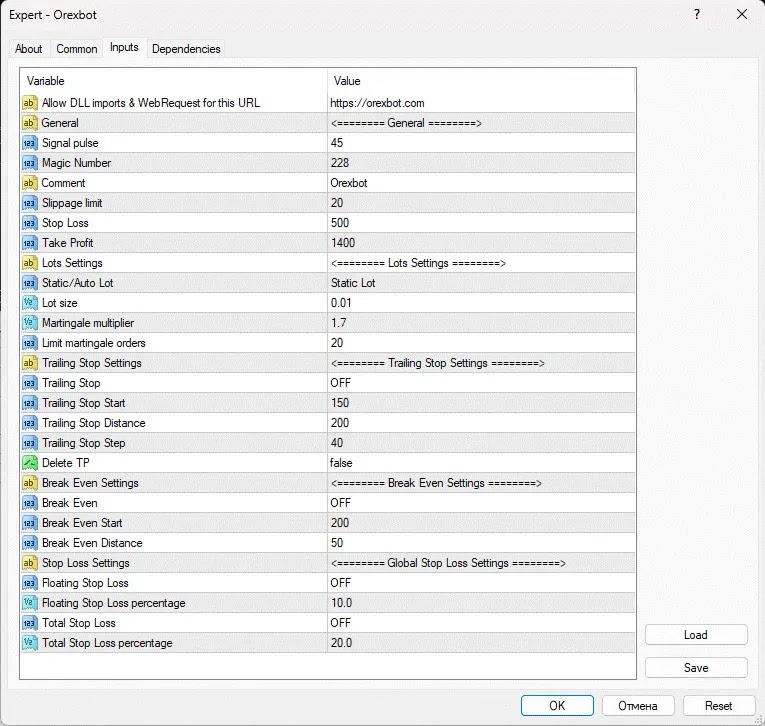
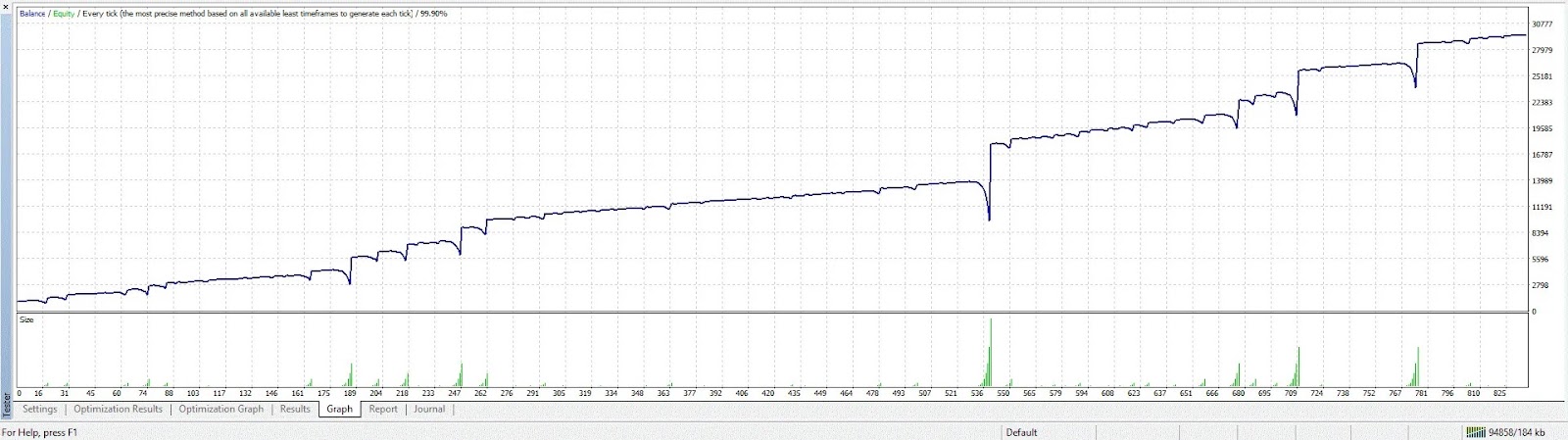
The Orexbot algorithmic trading bot can help you act fast, with real-time trading signals, insights, and comprehensive risk management strategies.
Start trading with Orexbot today